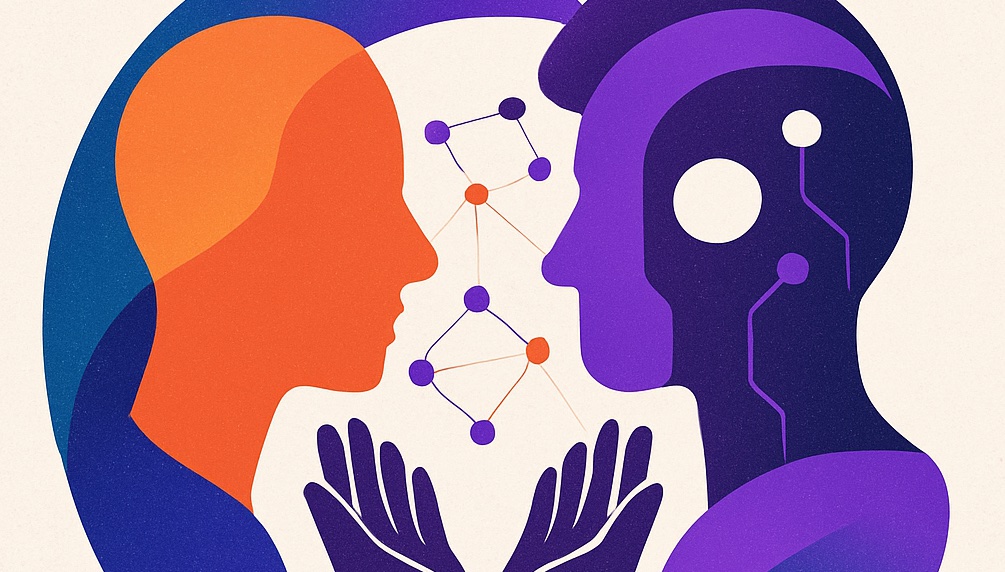
Artificial intelligence is evolving quickly, but one of the most important shifts happening right now is the move towards agentic AI—systems capable of planning, reasoning and acting with a degree of autonomy. They can simulate outcomes, test strategies, and help humans make more informed decisions.
It’s a transformative step forward, but it only works if the technology is designed with people firmly at the centre.

Beyond Automation: Unlocking Human Capability
Traditional AI often focuses on efficiency: automating tasks, streamlining processes, removing repetitive work. Agentic AI goes further. It aims to enhance human capability by:
- predicting complex outcomes using dynamic simulations
- surfacing strategic insight leaders would struggle to see alone
- functioning as a “what-if machine” to explore scenarios safely
- helping people make decisions with more clarity and foresight
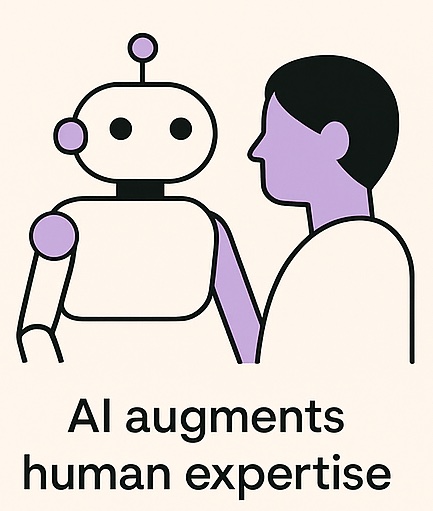
Rather than replacing human judgment, agentic systems are meant to augment it—effectively giving people “superpowers” by expanding what they can know and anticipate.
The Hidden Impact: Why Social Awareness Is Essential
A recurring theme in the field is the danger of designing AI only for the immediate end user. It’s easy to overlook how a system’s behaviour can ripple outwards and affect:
- colleagues
- communities
- entire industries
- society at large
History is full of examples where a well-intentioned piece of technology solved one problem but unintentionally created another. Autonomous systems can shift power dynamics, influence behaviour, or reshape patterns of daily life—often in ways their designers never predicted.
Because of this, agentic AI must consider not only who will use the system, but who else might be affected.
Human-in-the-Loop: A Safeguard Against Misalignment
As AI becomes more autonomous, the risk of misaligned objectives grows. Even small errors can carry outsized consequences when decisions are made at scale or involve sensitive outcomes.
Keeping humans meaningfully involved—especially in high-impact areas—is one of the most effective ways to ensure:
- alignment with human intent
- the ability to intervene when something seems off
- accountability and traceability
- trustworthiness
Human oversight isn’t a limitation; it’s a foundation for safe autonomy.
Collaboration Across Disciplines
Building responsible agentic systems isn’t only a technical challenge. It requires insight from behavioural science, ethics, social sciences, regulation, and lived human experience.
The most effective solutions are shaped by diverse perspectives, each illuminating risks or opportunities the others miss.
Measuring What Really Matters
Efficiency metrics alone no longer tell the whole story. Intelligent systems must be evaluated on:
- human agency
- wellbeing
- inclusiveness
- clarity and transparency
An AI system is successful not only when it works quickly, but when it works fairly, explainably, and in harmony with human values.
The Future: AI That Amplifies, Not Overrules
Agentic AI represents a major step forward, but its potential is only realised when the technology supports and elevates human capability. Done well, it helps us make decisions with greater confidence, navigate uncertainty more effectively, and understand the wider consequences of our actions.
The goal isn’t to replace people.
The goal is to create systems that help us think better, act wiser, and build solutions that benefit everyone—not just those at the centre of the screen.