Category Archives: Ai

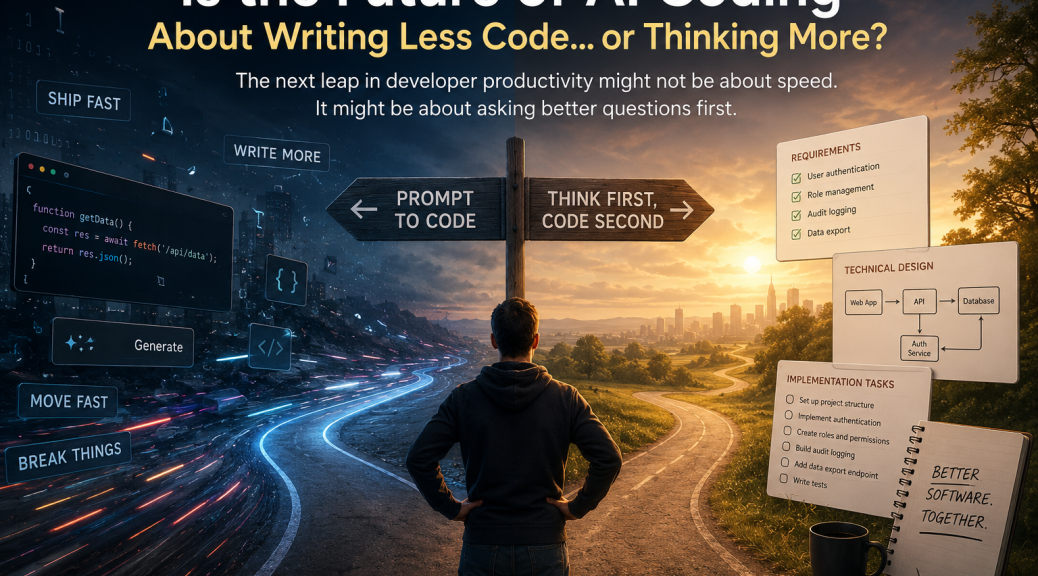
What If AI Could Stop Security Bugs Before You Even Wrote Them?

Why Kiro’s approach to software engineering might be more important than AI code generation itself

“Can we trust artificial intelligence to write secure software?”

It’s an easy question to ask, but I don’t think it’s the right one.

The better question is this:

Can AI help us become better software engineers, or will it simply help us produce more code, more quickly?

Continue reading What If AI Could Stop Security Bugs Before You Even Wrote Them? →

The Tower of Babel Rebuilt: Are We Creating a God in the Machine?

The Ancient Warning

“Come, let us build ourselves a city, with a tower that reaches to the heavens… so that we may make a name for ourselves.”
— Genesis 11:4

In the biblical story of the Tower of Babel, humanity’s unified ambition to reach the heavens is interrupted by divine intervention. Language is confounded, and the people are scattered—ambition halted by humility.

Today, we are building again. But this time, the tower is digital.

Continue reading The Tower of Babel Rebuilt: Are We Creating a God in the Machine? →

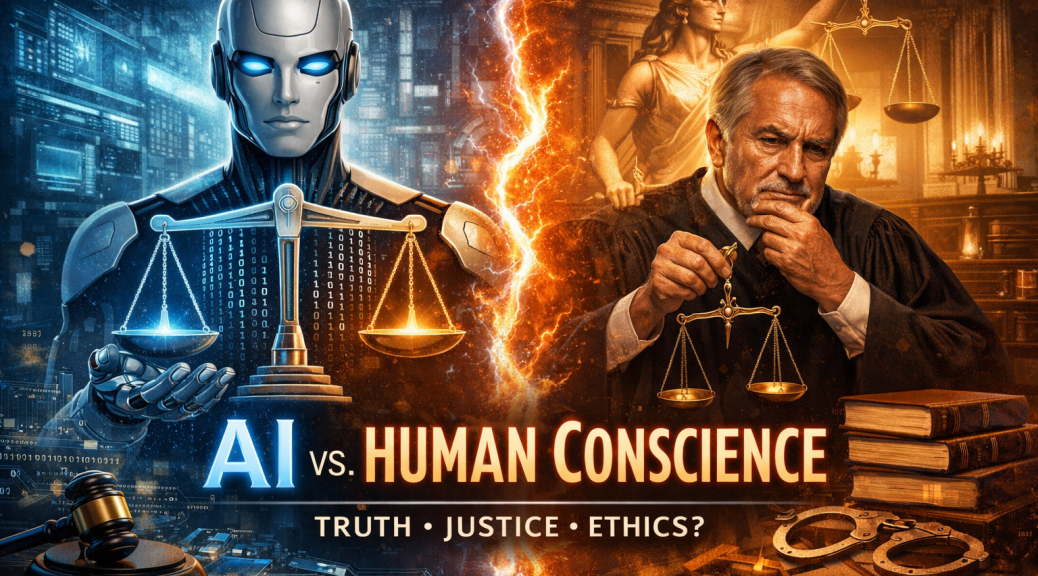
AI as Arbiter of Truth and Justice: Can Algorithms Supplant Human Conscience?

As artificial intelligence permeates everyday life, society faces a provocative question: are we ceding our definitions of truth and justice to machines? From AI-powered news feeds that shape what we see as “true” to algorithms advising judges on sentences, the influence of AI on moral and legal decisions is growing. Tech giants tout AI systems – from generative chatbots like ChatGPT to decision tools in courts and HR departments – as unbiased and efficient. Yet observers worry that by increasingly relying on AI to decide what is true and what is fair, we risk outsourcing our own moral judgement. Could an AI, even one designed to sound human, ever replace the human conscience that guides ethical decisions? This article explores the consequences of this shift, drawing on expert insights and current examples to challenge readers to critically consider how far we should entrust truth and justice to algorithms.

Continue reading AI as Arbiter of Truth and Justice: Can Algorithms Supplant Human Conscience? →

The Art of Using AI Responsibly

There’s no denying it: artificial intelligence has become an integral part of the way we work. Once the subject of science fiction, it now quietly supports us, helping with everything from writing reports and drafting emails to summarising meetings and finding answers at lightning speed. Yet, as with every great tool in history, the magic of AI lies not just in what it can do, but in how we choose to use it.

Continue reading The Art of Using AI Responsibly →

Redefining the Developer Experience with AI and DevOps

In today’s fast-paced tech landscape, the fusion of AI and DevOps is revolutionising the developer experience. As businesses strive to innovate continuously, software development teams have become indispensable. Yet, this pivotal role has also led to increased workloads and the necessity for new skills, especially with the convergence of coding, security, and IT management. We delves into how AI-enabled tools and DevOps can enhance developer satisfaction, productivity, and creativity, reducing burnout and fostering a more engaging work environment.

Continue reading Redefining the Developer Experience with AI and DevOps →

Exploring Responsible Generative AI: The Path to Ethical Innovation

Generative Artificial Intelligence (AI) represents one of the most significant technological advancements, offering capabilities that blur the lines between content generated by machines and humans. As we navigate this new frontier, it’s paramount that we guide this innovation responsibly. Emphasising the principles of responsibility and privacy, this guide provides a comprehensive roadmap for developing AI solutions that are not only advanced but also ethical and responsible.

Continue reading Exploring Responsible Generative AI: The Path to Ethical Innovation →

Phi-2: Microsoft’s Marvel in the World of Small Language Models

In the ever-evolving landscape of artificial intelligence, Microsoft has once again made headlines with the launch of Phi-2, a groundbreaking small language model (SLM) that is challenging the status quo of what smaller models can achieve. With 2.7 billion parameters, Phi-2 stands out not just for its size but for its remarkable capability to perform at par with, and even outperform, models many times its size. This development represents a significant leap forward in AI, showcasing the potential for compact models to drive innovation and efficiency across various sectors.

Continue reading Phi-2: Microsoft’s Marvel in the World of Small Language Models →